
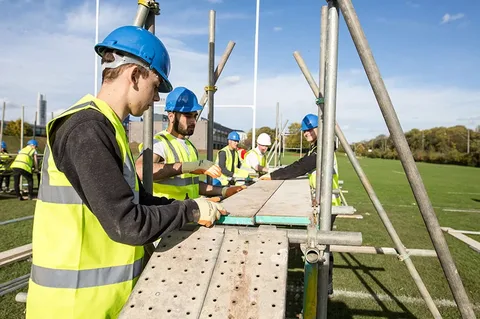
In civil engineering, knowing the theory is essential, but the true test of skill comes when ideas are transformed into structures that stand tall against time and nature. Many engineering graduates find themselves equipped with conceptual knowledge yet struggle to apply it in real-world scenarios. This is where civil training courses play a transformative role. They don’t just reinforce academic learning,they bridge the crucial gap between classroom concepts and field execution. With the help of hands-on learning, software mastery, and project-based exposure, these courses help aspiring engineers evolve into industry-ready professionals.
The Importance of Practical Training in Civil Engineering
Civil engineering is one of the most application-driven fields. It involves designing, constructing, and maintaining the infrastructure that shapes our daily lives, buildings, bridges, roads, and more. While universities provide a solid theoretical foundation, they often lack the in-depth practical training needed for professional readiness.
Modern civil engineering relies heavily on technology. Understanding load paths, materials, and design principles is just the start; engineers must also be adept at using advanced digital tools. Software proficiency is no longer optional, it’s essential for accuracy, efficiency, and career growth. Practical civil training courses address this need by blending core engineering knowledge with hands-on use of professional tools like ETABS, AutoCAD, and STAAD Pro.
Bridging the Knowledge Gap with Real-World Applications
In a traditional academic setup, students focus mainly on theoretical analysis and simplified models. However, real-world projects are far more complex. Civil training courses take learners beyond formulas and diagrams by offering exposure to realistic design challenges. Through guided projects, case studies, and interactive simulations, students learn how structures behave under various loads and environmental conditions.
One of the most effective ways to gain such experience is through building design in ETABS. This software enables learners to visualize how load distribution, stiffness, and support reactions affect the overall behavior of a building. Unlike static textbook examples, ETABS allows users to explore real-time structural responses and optimize designs for strength, stability, and cost-efficiency.
Learning Through ETABS Structural Software
ETABS structural software is widely recognized as one of the most powerful tools for analyzing and designing buildings. It helps engineers create accurate 3D models, perform dynamic analyses, and check compliance with global design codes. Through practical civil training courses, students gain firsthand experience in using ETABS to model structures, define material properties, and apply various load cases.
What makes ETABS training particularly beneficial is its integration of theory with visualization. For example, instead of simply learning how to calculate bending moments or shear forces, students can see these results mapped directly onto a 3D model. This strengthens understanding and fosters design intuition. Moreover, ETABS helps in identifying errors early in the design phase, something that is often missed in manual calculations.
From Classroom Concepts to Construction Reality
The transition from academic learning to professional work can be intimidating. Civil training courses ease this shift by introducing learners to real project workflows. You don’t just learn how to analyze a beam or a column, you learn how to interpret architectural drawings, select materials, and follow building codes. These aspects form the foundation of every successful project.
By using ETABS structural software during training, engineers get a sense of what it’s like to work in design consultancies or construction firms. They learn how to create efficient models, interpret analysis results, and prepare detailed design documentation. This experience not only boosts technical proficiency but also instills confidence in handling complex design scenarios.
The Role of Project-Based Learning
One of the defining features of modern civil training courses is project-based learning. Instead of passively consuming information, students actively engage with real or simulated projects. For example, a training program might include designing a multi-story residential building or analyzing a commercial complex using building design in ETABS. These projects encourage learners to think critically, collaborate with peers, and make design decisions backed by data.
Project-based learning also encourages creativity. It helps students experiment with different materials, load combinations, and structural systems. By making mistakes and refining their designs, learners build the problem-solving mindset essential for professional engineering practice.
The Added Advantage of Software Integration
A good civil training program doesn’t focus on a single software, it introduces a suite of tools that complement each other. While ETABS structural software is excellent for building analysis, combining it with other programs like STAAD Pro, Revit, and AutoCAD expands a student’s skill set. Together, these tools help engineers handle every stage of a project, from conceptual planning to structural detailing and documentation.
This multi-software proficiency is highly valued in the job market. Employers seek engineers who can adapt to diverse project environments and collaborate across teams. A candidate skilled in ETABS, for instance, can work seamlessly with architects and project managers to ensure design feasibility and compliance.
Why Civil Training Courses Matter for Career Growth
Enrolling in civil training courses offers a clear advantage in the competitive engineering landscape. Companies today are looking for professionals who are not just qualified but capable. By mastering industry software and gaining practical exposure, learners can confidently apply for roles in structural design, project management, and construction supervision.
Moreover, such training enhances employability. Graduates who have completed project-based courses are more likely to stand out in interviews and perform better on the job. Employers appreciate candidates who can contribute to projects from day one rather than requiring months of additional training.
Learning the Right Way: Tips for Success
Success in civil training courses depends on consistent effort and curiosity. Here are a few strategies to make the most of your learning journey:
- Be proactive: Don’t just follow tutorials, experiment with different design cases.
- Collaborate: Discuss your projects with peers or mentors for new perspectives.
- Stay updated: Software tools evolve constantly. Keep learning about new versions and features.
- Apply knowledge: Try linking every new concept you learn to real-world applications.
By following these practices, you can build not only technical expertise but also the confidence to tackle professional challenges independently.
How Civil Training Courses Shape the Future Engineer
The next generation of civil engineers will work in an increasingly digital and data-driven world. Automation, simulation, and AI-based design are transforming the industry. In such an environment, engineers who combine theoretical understanding with practical know-how will lead the change. Civil training courses are not just about learning software, they are about developing a mindset that embraces innovation, efficiency, and precision.
By working with tools like ETABS structural software and focusing on building design in ETABS, you cultivate the analytical skills and visual thinking required to design safe, sustainable, and elegant structures.
Conclusion
Practical civil training courses are more than academic supplements, they are the bridge that connects classroom learning with real-world engineering. They help learners transform from students into professionals who can think, design, and build with confidence. By mastering tools like ETABS and understanding how design translates to construction, you set yourself apart in a competitive industry.
In much the same way, platforms like Civilera empower professionals to interpret data and make informed decisions in their respective fields. Just as engineers use ETABS to visualize structures, traders use Civilera to visualize market trends, identify patterns, and plan effectively.
So, if you’re ready to turn your theoretical knowledge into practical expertise, invest your time in the right civil training courses today. The skills you build will serve as the foundation for a successful and future-ready engineering career.