
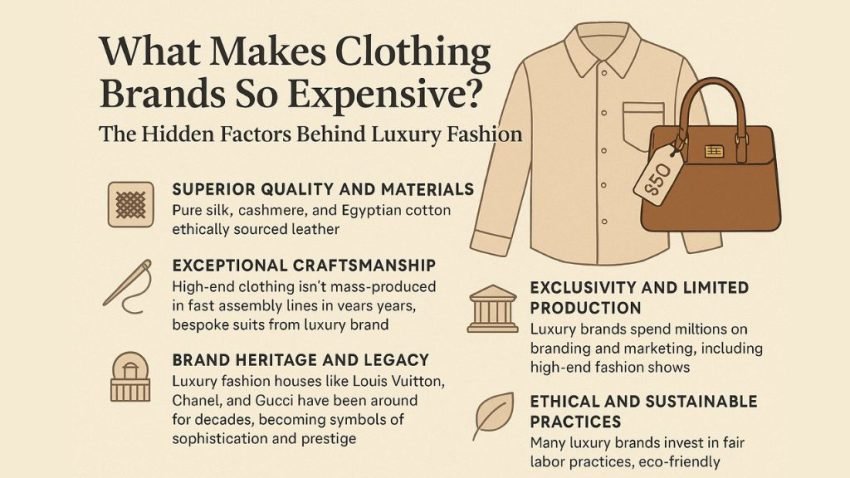
When you see a designer shirt priced at $500 while a similar-looking one costs $50, you might wonder — what really makes clothing brands so expensive? Is it just the label, or is there more behind the high price tag?
In reality, several factors contribute to the cost of luxury clothing. From quality craftsmanship to brand heritage, expensive fashion is often a complex blend of tangible and emotional value.
Let’s dive deep into what makes clothing brands expensive and why people are willing to pay a premium for them.
1. Superior Quality and Materials
One of the biggest factors influencing price is fabric quality. Luxury brands use premium materials such as:
- Pure silk, cashmere, and Egyptian cotton
- Ethically sourced leather
- Handwoven or custom-dyed fabrics
Unlike fast fashion, which often relies on synthetic blends, high-end brands invest in materials that feel better, last longer, and age beautifully. Even small details like lining fabrics, zippers, and buttons are sourced from the best suppliers, which significantly adds to the cost.
2. Exceptional Craftsmanship
High-end clothing isn’t mass-produced on a fast assembly line. Many luxury pieces are hand-stitched or custom-made by expert artisans who have spent years perfecting their craft.
For example, a bespoke suit from a luxury brand might take 40–60 hours to complete, with every detail tailored to perfection.
This level of precision, attention to detail, and time investment naturally increases the cost — but it also ensures durability and exclusivity.
3. Brand Heritage and Legacy
Luxury fashion houses like Louis Vuitton, Chanel, and Gucci have been around for decades — some for over a century. These brands have built a legacy of excellence, becoming symbols of sophistication and prestige.
You’re not just buying a product; you’re buying into the story and heritage that the brand represents. This emotional connection is a powerful driver behind why customers are willing to pay more.
4. Exclusivity and Limited Production
Scarcity often fuels desirability. Luxury brands intentionally produce limited quantities of certain collections, ensuring exclusivity.
When only a few hundred people in the world own a specific handbag or jacket, it creates a sense of privilege and uniqueness.
This controlled scarcity allows brands to maintain high demand and justify premium pricing.
5. Marketing, Celebrities, and Prestige
Luxury brands spend millions on branding and marketing — from high-end fashion shows to celebrity endorsements. Seeing stars and influencers wearing these clothes adds aspirational value.
Fashion houses also invest in luxurious retail experiences, from flagship stores in Paris and Milan to personalized customer service. These intangible aspects elevate the perceived value far beyond the physical garment.
6. Ethical and Sustainable Practices
In recent years, many luxury brands have shifted toward sustainable and ethical fashion. They invest in fair labor practices, eco-friendly materials, and transparent supply chains.
While these initiatives are commendable, they also increase production costs. However, conscious consumers often see this as a worthwhile investment in responsible fashion.
7. The Psychology of Luxury
Finally, there’s a psychological element to expensive clothing. Wearing designer brands often boosts confidence and symbolizes success or social status. The feeling of exclusivity and recognition drives people to invest in luxury fashion — even when more affordable options exist.
Final Thoughts
Expensive clothing isn’t just about fabric and thread — it’s a mix of art, heritage, craftsmanship, exclusivity, and perception. While some may see it as overindulgence, others view it as an appreciation for design, quality, and self-expression.
Ultimately, whether or not luxury clothing is “worth it” depends on what you value more: function or prestige, trend or timelessness.