
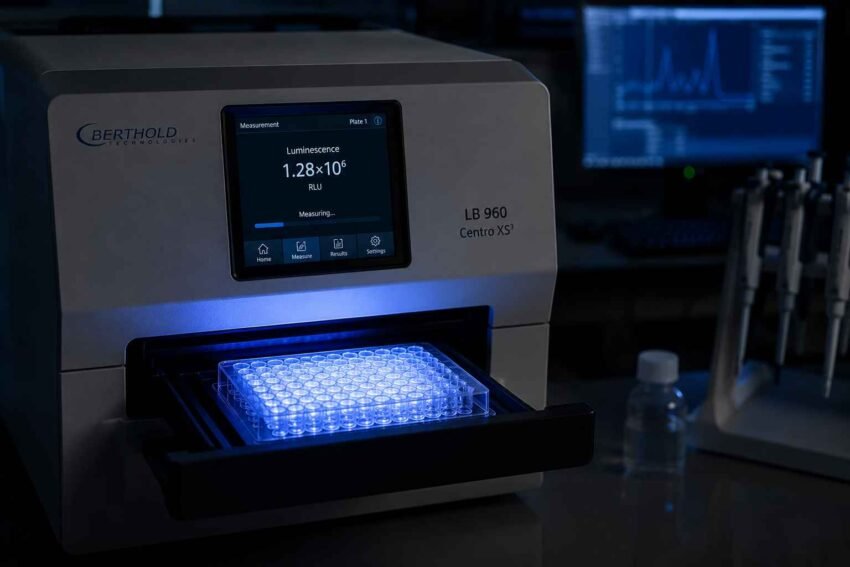
Chemiluminescent immunoassay (CLIA) is an advanced immunodetection technology that measures the amount of light emitted during a chemical reaction as a proxy for the concentration of a target analyte. Unlike traditional colorimetric ELISA methods, CLIA does not rely on enzymatic color development limited by optical absorption. Instead, the luminescent signal offers an extraordinarily wide dynamic range and ultra-high sensitivity — often several orders of magnitude more sensitive than standard ELISA platforms.
Quantitative chemiluminescent immunoassay kits have rapidly become the gold standard for applications requiring sub-picogram detection limits, high-throughput sample processing, and minimal background interference.
How CLIA Technology Works
In a typical CLIA assay, an antigen-antibody reaction occurs as in a sandwich ELISA. However, instead of an HRP-substrate colorimetric reaction, the detection uses a chemiluminescent label — most commonly acridinium esters or horseradish peroxidase with luminol-based substrates. When the chemiluminescent compound reacts with an oxidizing agent (such as hydrogen peroxide), it emits photons that are captured by a highly sensitive photomultiplier tube (PMT) in the luminometer. The resulting Relative Light Units (RLU) are proportional to analyte concentration.
Why Choose CLIA Over ELISA?
While ELISA remains valuable for many research applications, quantitative CLIA kits offer distinct advantages:
- Superior Sensitivity: CLIA can detect analytes at femtomolar or sub-picogram levels, making it ideal for measuring trace hormones, low-abundance cytokines, and viral antigens.
- Wider Dynamic Range: Luminescent detection provides 5–7 orders of magnitude of dynamic range compared to 2–3 for absorbance-based ELISA.
- Reduced Background Noise: Because biological samples rarely emit significant baseline luminescence, CLIA achieves superior signal-to-noise ratios.
- Faster Protocols: Many CLIA kits are designed for short incubation times and do not require the stop-solution step used in colorimetric ELISA.
- Automation-Friendly: CLIA kits integrate seamlessly with automated immunoassay platforms used in high-throughput clinical and research laboratories.
Key Research Applications of Quantitative CLIA Kits
Hormonal and Endocrine Profiling
CLIA kits are the preferred choice for quantifying hormones like insulin, C-peptide, parathyroid hormone (PTH), human chorionic gonadotropin (hCG), and thyroid hormones. Their sensitivity is unmatched for detecting hormonal changes at physiological and pathophysiological concentrations in serum or plasma samples.
Infectious Disease Diagnostics
Hepatitis B surface antigen (HBsAg), HIV antigen/antibody combo tests, and SARS-CoV-2 antibody assays are commonly run on CLIA-based platforms. The technology’s sensitivity and rapid kinetics make it ideal for clinical screening and epidemiological surveillance.
Tumor Marker Analysis
Oncology research greatly benefits from CLIA kits measuring AFP, CEA, CA-199, PSA, and other tumor markers with the high sensitivity required to detect early-stage malignancies or monitor minimal residual disease.
Autoimmune Biomarker Detection
The detection of low-titer autoantibodies — such as anti-dsDNA, anti-CCP, and ANA — in serum demands the sensitivity that CLIA provides, making it a standard tool in rheumatology and autoimmune disease research.
Selecting the Right CLIA Kit for Your Laboratory
When evaluating quantitative chemiluminescent immunoassay kits, researchers should assess the following parameters: analyte specificity and cross-reactivity profile, assay sensitivity (LLOD in pg/mL or pmol/L), coefficient of variation (CV%) for intra- and inter-assay reproducibility, compatibility with your luminometer platform, and the completeness of the kit including pre-coated tubes or plates, standards, and detection reagents.
Always request validation data for the specific sample matrix — whether serum, plasma, urine, or CSF — that you intend to use, as matrix effects can significantly influence CLIA performance.
MyBioSource CLIA Kits: Quality You Can Quantify
MyBioSource offers a comprehensive range of quantitative chemiluminescent immunoassay kits for human, mouse, rat, and other species. Each kit is developed using high-affinity antibody pairs and validated through rigorous analytical performance testing. Detailed standard curve data, sensitivity specifications, and sample compatibility information are provided for every product, enabling researchers to select with confidence.
Conclusion
Quantitative chemiluminescent immunoassay kits represent a significant technological advancement over conventional colorimetric methods. Their exceptional sensitivity, wide dynamic range, and automation compatibility make them the preferred choice for clinical research, diagnostics development, and biomarker discovery. Discover MyBioSource’s extensive CLIA kit catalog and bring next-level detection precision to your laboratory.