
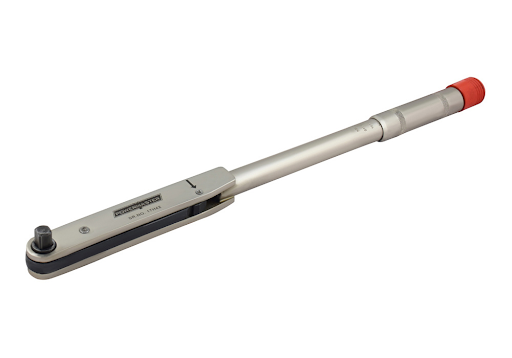
Critical bolted joints are essential to the ongoing and safe functioning of many businesses. Leaks, vibration-related problems, and decreased efficiency can result from improper bolting. This explains why the selection of the right bolting tool is really important because tightening a fastener isn’t simply about making it “tight.”
Applied torque must be controlled because too little or too much can affect a joint’s integrity and performance. A torque wrench provides controlled tightening and precision, not just force, making it a solution to this problem.
What Is A Mechanical Torque Wrench?
A mechanical torque wrench could be found at a manufacturing plant, a mechanic’s workshop, or the garage of an auto enthusiast. A torque wrench applies the right amount of torque to a bolt or nut. Tightening it keeps something in place. But every bolt has a “just right” level of tightness. That’s where a torque wrench comes in. It tells you when you’ve reached the correct torque so you don’t go too far or fall short.
This helps you to prevent under-tightening or over-tightening. Accurate fastener tightening also reduces inconsistent assembly issues, resulting in safer, more reliable fastener assembly.
Why Is Torque Wrench Accuracy Important?
A mechanical torque wrench appears to be similar to a regular wrench at first glance.
Several types of torque wrenches exist, but they all share the same basic goal: to control the force applied when tightening.
The important point is that a torque wrench can look perfectly functional while its measurement accuracy has changed. All torque wrenches become less accurate with time. Most need recalibration at least annually. Skipping this step can cause major errors.
How a Torque Wrench Is Calibrated
Here are a few quick steps to calibrate a torque wrench:
- First, check the wrench for any damage.
- To check for damage, always use a well-calibrated torque measurement test device.
- Only apply controlled torque at specified test points.
- Once you obtain the value, compare it with the reference measurement.
- Compare the results with the reference measurement to confirm they meet the accuracy requirements.
- If needed, fix and adjust the wrench to meet accuracy requirements.
- Document the calibration and establish the next calibration interval based on the relevant requirements and usage.
When Should You Calibrate A Torque Wrench?
The requirement for calibrating a torque wrench depends on multiple factors and doesn’t depend solely on the number but on the following factors:
- Frequency of use
- Working environment
- Tool condition
- Previous calibration results
- Manufacturer recommendations
- Quality-management requirements
- Industry/application requirements
Conclusion
Maintaining the accuracy of a mechanical torque wrench is as important as choosing the right type of wrench for your work and fasteners. A correct torque wrench tells you how much force needs to be applied or when to stop applying torque, so you don’t do over-tightening or under-tightening.
For reliable industrial fastening equipment, consider visiting Powermaster Ltd. They offer a wide range of industrial fastening solutions, including mechanical and hydraulic torque wrenches, hydraulic pumps, bolt tensioners, impact sockets, and industrial bolting systems.