
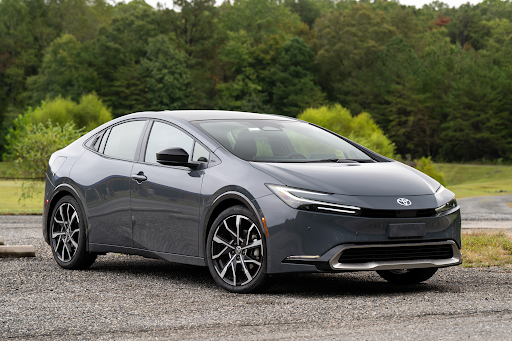
Toyota Hyryder ownership is easier to understand when you separate the headline features from the everyday experience. Its dimensions suit family use, the strong hybrid can reduce fuel use in stop-go traffic, and the CNG version targets drivers with predictable refuelling access. The right version depends on where you drive, how far you travel and how much boot flexibility you need.
Hyryder dimensions and efficiency
| Hyryder measure | Reference |
| Height | 1645 mm |
| Length | 4365 mm |
| Tyres | 215/60 R17 |
| Width | 1795 mm |
| Wheelbase | 2600 mm |
| Strong-hybrid mileage | 27.97 kmpl |
| CNG mileage | 26.6 km/kg |
Which Hyryder powertrain suits what use
| Powertrain | What it suits |
| Strong hybrid | High urban running and fuel-efficiency focus |
| NeoDrive petrol | Simpler ownership and broader transmission choice |
| CNG | Fuel-cost-conscious users with access to CNG |
| AWD petrol | Buyers who value added traction more than maximum mileage |
How the Hyryder feels in daily use
The upright seating position and mid-size dimensions make the Hyryder easy to place for an SUV of its class. A 5.4 m turning radius is manageable in cities, though it will not feel as nimble as a sub-four-metre compact SUV. The 2600 mm wheelbase helps rear-seat space without making the overall length excessive.
A hybrid test drive should include slow traffic, open road and braking. Regenerative behaviour can feel different from a conventional petrol car, and comfort with that response matters.
Ground clearance needs context
Toyota Hyryder ground clearance is often searched as a single number, but real usability also depends on wheelbase, suspension load and tyre condition. Instead of relying only on a brochure figure, drive over the speed breakers and ramps common in your area. A fully loaded vehicle can behave differently from an empty test car.
Hybrid versus CNG for running cost
The strong hybrid’s 27.97 kmpl claim is attractive for city-heavy drivers. CNG claims 26.6 km/kg and may deliver a low fuel cost where CNG is readily available. The difference comes down to purchase price, refuelling convenience and how you use the boot.
Variants should follow your comfort priorities
Ventilated seats, camera systems, sunroof and premium trim can be useful, but they should come after powertrain and safety. A mid variant with the right fuel system can be a more sensible long-term choice than a top trim with a less suitable drivetrain.
Long-trip checks
For highway touring, focus on seat support, overtaking response, tyre condition, spare-wheel arrangement and boot usability. The vehicle’s certified mileage is only one part of journey comfort. A quiet cabin and predictable cruise behaviour often matter more over four or five hours.
Use ground clearance as a real-route question
A published ground-clearance figure cannot tell you exactly how the Hyryder will handle the steep ramp at your apartment or an oversized local speed breaker. The wheelbase, passenger load and approach angle all influence contact risk. Ask for a route that includes the obstacles you face regularly. A five-minute practical check can settle the issue more reliably than debating a single number online.
Hybrid owners should understand regenerative braking
The strong hybrid can use regenerative braking to recover energy, which may change pedal feel compared with a conventional petrol car. Most drivers adapt quickly, but a proper test drive should include slow traffic and repeated braking. Comfort with the powertrain matters because the hybrid premium is justified only if you also enjoy how it behaves in the environment where it saves the most fuel.
Plan for long-term servicing
Ask about routine service intervals, hybrid-system warranty terms and the nearest trained workshop. A sophisticated powertrain should not be judged only by fuel economy; service access and warranty confidence also support long ownership. CNG buyers should similarly ask about cylinder inspection requirements and related maintenance.
Think about tyre and wheel choices
Higher Hyryder variants may use different wheel finishes or equipment, but buyers should focus on tyre availability, replacement cost and ride comfort. Larger or more premium tyres can cost more when replacement time arrives. Check the exact size, ask about a full-size spare or repair arrangement and price a set from reputable sellers. For households that drive long distances on mixed roads, tyre quality and sidewall condition can affect comfort, braking and puncture resilience more than cosmetic wheel design.
Make the Hyryder test drive representative
Do not use a short dealership loop as the only basis for choosing a powertrain. Ask to drive the strong hybrid through slow traffic, the petrol version on a faster stretch and, if considering CNG, check how it responds with the air-conditioning running. Include a speed breaker or ramp similar to those near your home so the ground-clearance question becomes practical rather than theoretical. After the drives, compare the exact variants and final prices. The best Toyota Hyryder for your household is the one whose drivetrain, ride and packaging feel right in the conditions you face most often.
Conclusion
Hyryder ownership is less about chasing one specification and more about choosing the correct powertrain. Strong hybrid, petrol, CNG and AWD each serve a different pattern. Test the version you intend to buy and judge comfort, ground-clearance behaviour and luggage flexibility in real conditions.