
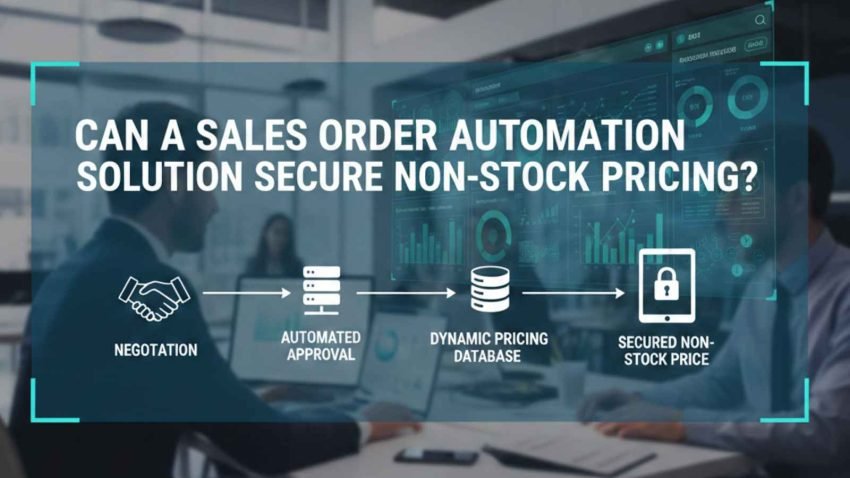
Pricing non-stock items can be a complex challenge for sales teams. How can businesses ensure accurate quotes when products are not readily available in inventory? How can teams avoid mispricing that impacts profitability and customer satisfaction?
The answer lies in sales order automation software. By automating pricing and order processes, companies can quickly retrieve supplier rates, apply discounts, and maintain consistent pricing standards even for non-stock items.
Automation not only reduces errors but also speeds up the quoting process. Sales teams can instantly access up-to-date supplier pricing, track approvals, and respond to customer inquiries without delays.
With built-in validation and predictive features, the system ensures that each quote aligns with current costs and profitability goals. Ultimately, integrating automation into pricing strategies enables businesses to secure accurate, competitive, and timely quotes, improving both revenue and customer trust.
Why Non-Stock Pricing is Challenging
Non-stock items are often subject to variable costs and limited availability. Common challenges include:
- Rapid changes in supplier pricing
- Manual calculation errors during quoting
- Delays in receiving supplier confirmation
- Lack of visibility into current margins
These factors increase the risk of underpricing or overpricing, which can lead to lost revenue or customer dissatisfaction.
How Automation Ensures Accurate Pricing
A sales order automation software simplifies non-stock pricing by automating key processes:
- Retrieving real-time supplier rates automatically
- Applying discounts, promotions, or special pricing rules
- Calculating margins and profit accurately
- Generating quotes for customer approval instantly
By removing manual steps, automation reduces errors and ensures consistent, reliable pricing across all orders.
Streamlined Approval Processes
Pricing approvals often slow down sales cycles and introduce errors. Automation improves efficiency by:
- Routing quotes to appropriate managers for approval
- Automatically tracking approval status
- Sending notifications for pending actions
- Logging decisions for transparency and auditing
Faster, standardized approvals help sales teams respond quickly while maintaining control over profitability.
Integration with Supplier Systems
Automation works best when it connects seamlessly with external systems:
- Supplier portals for live pricing and availability
- ERP systems for inventory and accounting
- CRM platforms for customer order history
Integration ensures data flows efficiently, reducing manual lookups and minimizing the risk of outdated or inaccurate pricing.
Monitoring and Alerts for Dynamic Pricing
Non-stock pricing can fluctuate frequently. Automated solutions provide real-time monitoring:
- Alerts for price changes from suppliers
- Notifications for contract expiration or rate updates
- Insights into cost trends and fluctuations
- Early warnings for potential margin risks
These features allow teams to adapt quickly, ensuring quotes remain accurate and competitive.
Reducing Errors and Improving Accuracy
Manual calculations for non-stock items often lead to mistakes:
- Wrong product codes or units
- Incorrect margin calculations
- Missing supplier terms or discounts
- Duplicate or inconsistent quotes
A sales order automation software eliminates these errors by validating each quote against supplier data and pricing rules before submission.
Boosting Productivity and Customer Satisfaction
Automation saves time and improves responsiveness:
- Faster generation of accurate quotes
- Reduced back-and-forth communication with suppliers
- Immediate responses to customer inquiries
- Standardized procedures for all non-stock items
Efficient quoting processes improve customer trust, shorten sales cycles, and allow teams to focus on strategic activities.
Predictive Insights for Pricing Strategy
Advanced automation tools provide analytics to support better pricing decisions:
- Identify patterns in supplier pricing over time
- Forecast potential cost changes for non-stock items
- Suggest optimal pricing strategies to maintain margins
- Highlight products with higher risk of margin erosion
Predictive insights help sales teams make informed decisions and protect profitability.
Key Benefits at a Glance
Implementing a sales order automation software for non-stock pricing delivers multiple advantages:
- Accurate, consistent quotes every time
- Faster order processing and approvals
- Reduced errors and rework
- Real-time supplier price visibility
- Predictive analytics for smarter pricing decisions
- Improved customer satisfaction and trust
These benefits combine to make non-stock pricing less risky, more efficient, and more profitable.
Steps to Implement Automation Effectively
To maximize pricing accuracy, companies should:
- Map current non-stock pricing workflows
- Integrate automation with supplier and ERP systems
- Set up validation rules for quotes, margins, and approvals
- Enable real-time monitoring and alerts for price changes
- Use analytics to optimize pricing strategies continuously
Following these steps ensures reliable, timely, and profitable non-stock pricing.
Final Thoughts
Securing accurate pricing for non-stock items is a critical challenge for sales teams, but sales order automation software provides an effective solution. By automating quote generation, integrating supplier data, validating margins, and monitoring dynamic pricing, businesses reduce errors, speed up approvals, and maintain profitability.
Automation also supports predictive insights and strategic decision-making, enabling teams to respond faster and more confidently to customer requests. The result is not only accurate pricing but also improved customer satisfaction, faster sales cycles, and a more efficient sales operation. Integrating automation into non-stock pricing processes ensures that businesses stay competitive, profitable, and agile in a rapidly changing market.