
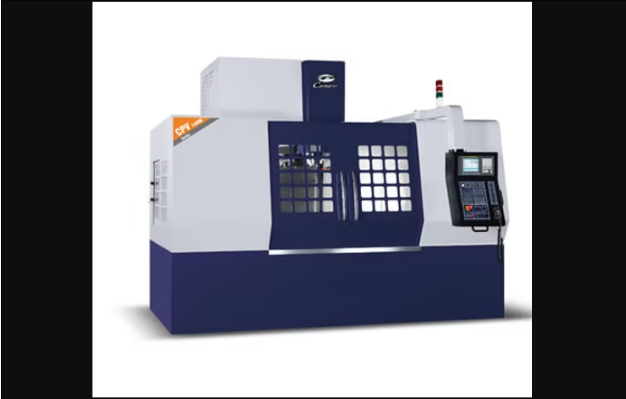
When setting up or expanding a machining operation, choosing between a CNC vertical machining center and a horizontal machining center is one of the most crucial decisions you’ll face. Each machine type offers unique strengths and considerations that affect productivity, cost, precision, and workflow efficiency. Understanding the differences and aligning them with your shop’s goals is key to maximizing your investment and output.
In this blog, we’ll break down the operational mechanics, pros and cons, and common applications of vertical and horizontal machining centers, while also exploring advanced options like the 5-axis vertical machining center, to help you determine which is the best fit for your shop’s needs.
What Is a CNC Vertical Machining Center?
A CNC vertical machining center (VMC) is a machine tool where the spindle axis is vertically oriented. Tools are mounted vertically, and the workpiece is usually held on a stationary table that moves in the X and Y directions. VMCs are typically used for milling, drilling, tapping, and contouring operations.
Vertical machining centers are popular for their user-friendly design, smaller footprint, and affordability. Their visibility and ease of access during setup make them ideal for single-piece or low-volume production, especially when high precision is required.
Advanced vertical machines like the 5-axis vertical machining center add further versatility, enabling the spindle or table to tilt and rotate, allowing for the machining of complex geometries without repositioning the workpiece.
What Is a Horizontal Machining Center?
In contrast, horizontal machining centers (HMCs) have a spindle that is horizontally oriented. These machines often come with rotary tables or pallet changers, allowing the workpiece to be machined on multiple sides without being repositioned manually.
HMCs are generally used for high-volume production and are favored in industries such as automotive and aerospace, where large parts or repeated production runs are common. Their ability to remove chips using gravity enhances cutting performance and reduces heat buildup, contributing to longer tool life.
Key Differences Between Vertical and Horizontal Machining Centers
-
Spindle Orientation and Chip Evacuation
- VMCs have vertical spindles, making them better suited for flat workpieces and easier chip removal with air blast or coolant.
- HMCs allow chips to fall away naturally due to their horizontal orientation, reducing tool wear and improving surface finish during longer production cycles.
- VMCs have vertical spindles, making them better suited for flat workpieces and easier chip removal with air blast or coolant.
-
Workpiece Complexity and Accessibility
- VMCs are easier to set up and are more intuitive for operators. However, accessing multiple sides of a complex part requires repositioning or a 5-axis vertical machining center.
- HMCs, with their built-in rotary capabilities, can reach multiple faces in one setup, reducing human error and improving precision.
- VMCs are easier to set up and are more intuitive for operators. However, accessing multiple sides of a complex part requires repositioning or a 5-axis vertical machining center.
-
Footprint and Cost
- VMCs typically have a smaller footprint and lower initial cost, making them ideal for smaller shops or prototype development.
- HMCs take up more space and are more expensive, but offer greater productivity for large-scale operations.
- VMCs typically have a smaller footprint and lower initial cost, making them ideal for smaller shops or prototype development.
-
Tool Life and Maintenance
- Tool life in HMCs can be superior due to better chip evacuation and coolant flow.
- VMCs may require more frequent tool changes and maintenance, especially during long machining runs.
- Tool life in HMCs can be superior due to better chip evacuation and coolant flow.
-
Automation and Throughput
- HMCs are often used in automated systems with pallet changers and robotic loading, leading to reduced downtime and increased throughput.
- While automation is possible with VMCs, it is typically less integrated and requires more manual intervention.
- HMCs are often used in automated systems with pallet changers and robotic loading, leading to reduced downtime and increased throughput.
When to Choose a CNC Vertical Machining Center
A CNC vertical machining center is ideal if:
- You work with flat or moderately complex parts.
- Your shop handles a high mix of low-volume work.
- You are looking for a cost-effective, space-efficient solution.
- Operator visibility and ease of use are high priorities.
For example, in tool and die shops, prototype manufacturing, and mold making, vertical machining centers offer a perfect blend of flexibility and affordability. If part geometry becomes more complex, upgrading to a 5-axis vertical machining center can offer added flexibility without transitioning to a horizontal setup.
When to Choose a Horizontal Machining Center
A horizontal machining center is a better choice if:
- Your operations involve high-volume production or batch machining.
- You need to machine multiple sides of a part efficiently.
- Chip accumulation and heat buildup are concerns during longer runs.
- You plan to automate production with pallet systems or robotic arms.
Industries like aerospace, defense, and heavy equipment manufacturing benefit significantly from the speed and efficiency that HMCs offer, especially for large, complex, or prismatic parts.
Conclusion
The decision between a CNC vertical machining center and a horizontal machining center ultimately depends on your shop’s size, production volume, complexity of parts, and investment capacity. For job shops, prototyping, or custom parts, the vertical setup, especially with options like a 5-axis vertical machining center, offers flexibility and cost-efficiency. On the other hand, high-volume, multi-face machining applications are better served by horizontal machining centers due to their superior productivity and automation potential.
Evaluate your current workflow, future growth, and production goals carefully. Choosing the right machine can dramatically enhance your machining capabilities, reduce costs, and improve lead times. No matter which route you choose, both machine types play a vital role in the broader world of CNC vertical machining.