
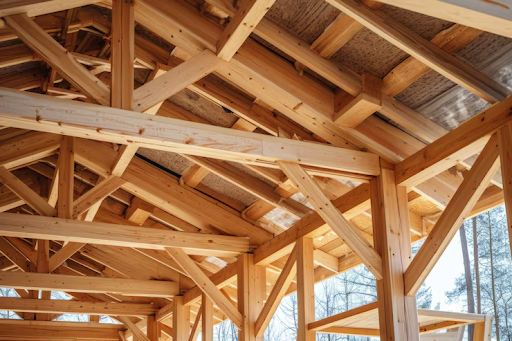
The built environment of a business sends powerful signals to customers, employees, and partners. Custom timber structures for business communicate craftsmanship, permanence, and a connection to natural materials that concrete, steel, and drywall interiors cannot replicate. From exterior canopies and entrance structures to interior timber ceiling systems and structural accents, custom timber design for commercial spaces elevates brand perception, improves occupant wellbeing, and creates enduring architectural identity.
Why Timber Matters in Commercial Environments
Decades of environmental psychology research support what designers have long understood intuitively: natural materials in the built environment improve human wellbeing, reduce stress, enhance mood, and increase productivity. Wood—particularly visible, natural structural timber—is the most consistently effective biophilic material in commercial settings.
Customer Experience Businesses in hospitality, retail, food service, and entertainment that use natural timber elements consistently report stronger emotional connections with customers, longer dwell times, higher repeat visit rates, and stronger social media documentation. Customers photograph and share timber-rich environments—generating organic marketing that no advertising budget can replicate.
Employee Wellbeing Office and workplace environments incorporating exposed timber elements show measurable improvements in employee satisfaction, reduced absenteeism, and improved cognitive performance metrics compared to conventional built environments.
Brand Identity For businesses whose brand values include quality, craftsmanship, sustainability, or connection to natural environments, custom timber structures create physical embodiment of those values—far more credible than marketing language alone.
Applications of Custom Timber Design for Commercial Spaces
Exterior Canopies and Entry Structures A timber frame entry canopy defines a business’s presence from the street—communicating quality and character before a customer enters. Timber canopies over exterior seating areas, patios, and walkways extend the commercial environment outdoors in hospitable form.
Interior Ceiling Systems Exposed timber ceiling structures—exposed beams, decorative truss systems, or full timber frame ceiling assemblies—transform commercial interiors. Restaurants, hotels, breweries, tasting rooms, gyms, and retail environments use timber ceiling systems to create warm, characterful spaces that define the customer experience.
Structural Timber Elements Timber columns, feature beams, and structural accent elements within conventional construction systems allow businesses to incorporate timber’s aesthetic benefits without full timber frame construction—a cost-effective approach to adding natural material character.
Outdoor Commercial Spaces Timber pergolas, pavilions, and shade structures over restaurant patios, brewery beer gardens, hotel pool decks, and retail outdoor environments extend commercial activity into outdoor space and create photogenic destinations that attract customers.
Event and Hospitality Structures Wedding venues, event barns, and hospitality pavilions represent some of the most successful commercial applications of custom timber structures. The architectural drama of heavy timber in large clear-span event spaces creates settings that command premium pricing and high booking rates.
Sustainable Timber Construction for Business
Sustainability credentials increasingly matter to commercial enterprises managing ESG reporting, LEED certification targets, and environmentally conscious customer bases.
Carbon Sequestration Structural timber stores the carbon captured during the tree’s growing years. A typical timber frame structure sequesters several tonnes of carbon dioxide equivalent over its service life—a genuine environmental benefit documented in lifecycle assessment studies.
Renewable Material Responsibly sourced timber from certified forests (FSC, SFI) is the only major structural material that is both renewable and biodegradable. Sustainable timber construction for business contributes to verifiable environmental performance metrics.
Longevity Structures that last generations require fewer replacement cycles and less embedded carbon over time. Timber’s documented longevity—centuries in historical examples—makes it a genuinely sustainable structural choice from a lifecycle perspective.
LEED Contribution Custom timber structures designed with certified wood products, low-VOC finishes, and responsible material sourcing contribute to LEED credit categories including Materials and Resources, Indoor Environmental Quality, and Innovation.
Planning Your Commercial Timber Project
Design-Build Advantage Working with a design-build firm experienced in commercial timber structures streamlines the design, engineering, permitting, and construction process under a single point of accountability.
Budget Realism Custom timber design for commercial spaces carries a premium over conventional construction—typically offset by reduced interior finishing requirements (exposed timber is the finish), marketing value, and longevity. Transparent budgeting from experienced commercial timber builders prevents scope disappointments.
Code Compliance Commercial occupancy classifications, occupant load calculations, fire rating requirements, and accessibility standards all apply to commercial timber structures. Experienced commercial timber builders navigate these requirements from the outset.
Conclusion
Custom timber structures for business represent a sophisticated investment in the physical environments that shape customer experience, employee wellbeing, and brand identity. Custom timber design for commercial spaces and sustainable timber construction for business combine architectural beauty, environmental responsibility, and long-term commercial value—creating built environments that distinguish forward-thinking businesses in markets where differentiation increasingly defines success.