
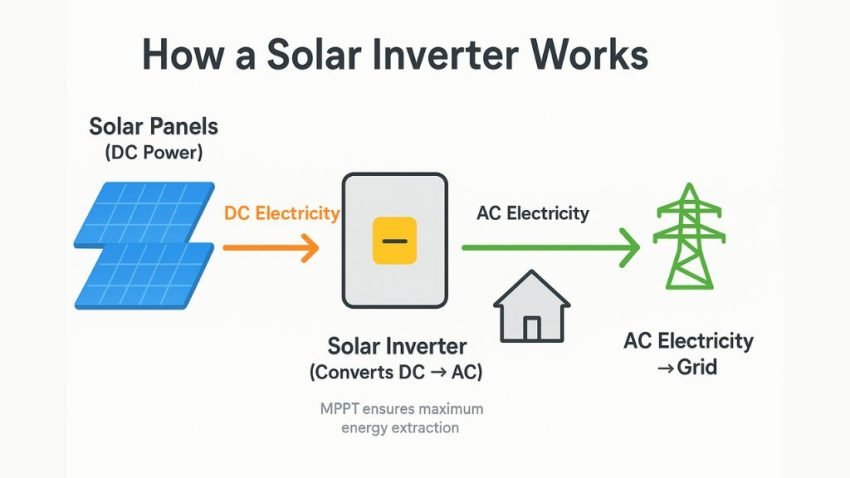
Solar power has become one of the fastest-growing renewable energy sources in the world, and at the heart of every solar system lies a crucial component — the solar inverter. It’s the device that transforms the direct current (DC) produced by your solar panels into alternating current (AC) that can power your home or business.
In this comprehensive guide, you’ll learn what a solar inverter is, how it works, the different types available, and how to choose the best one for your energy needs. Whether you’re new to solar or upgrading your existing system, this guide will help you make an informed decision.
What Is a Solar Inverter?
A solar inverter is an electronic device that converts the DC electricity generated by solar panels into AC electricity, the form of power most household appliances and the electrical grid use.
Without an inverter, the electricity from your panels couldn’t power your lights, fans, or any AC-based equipment. In other words, the inverter acts as the brain and heart of your solar system, managing energy flow and ensuring everything operates safely and efficiently.
Did you know?
Even if your panels produce plenty of power, your home can’t use it until the inverter converts it to AC — that’s why inverter efficiency directly affects your overall system performance.
How Does a Solar Inverter Work?
The working principle of a solar inverter is straightforward yet fascinating:
- DC Generation: Solar panels absorb sunlight and generate DC electricity.
- Power Transmission: The DC current flows to the inverter.
- Conversion Process: The inverter uses semiconductor switches and pulse-width modulation (PWM) to convert DC into clean AC power.
- Optimization (MPPT): Advanced inverters use Maximum Power Point Tracking (MPPT) to extract the highest possible energy from the panels.
- Grid Synchronization: For grid-tied systems, the inverter matches its AC output to the grid’s voltage and frequency.
This entire process happens in milliseconds, ensuring smooth, continuous electricity flow.
Why Is a Solar Inverter Important?
The inverter does much more than just convert electricity. It’s responsible for:
- Energy Efficiency: Maximizing output through MPPT ensures you get the most from your panels.
- System Monitoring: Many modern inverters track performance and report data to apps or online dashboards.
- Safety: Inverters detect faults, disconnect during voltage fluctuations, and protect against overloads.
- Grid Compatibility: They synchronize solar power with your local grid, ensuring stability and safety.
Pro Tip: A high-quality inverter can boost your overall solar system efficiency by up to 30%.
Types of Solar Inverters
Not all inverters are the same. Here are the main types you’ll come across:
1. String Inverters
- Use case: Residential and small commercial systems
- How it works: Connects multiple solar panels in a “string.” If one panel underperforms, the entire string’s output may drop.
- Pros: Affordable, easy to maintain
- Cons: Lower efficiency in shaded conditions
2. Micro Inverters
- Use case: Homes with shading issues or complex roofs
- How it works: Installed on each panel, converting DC to AC at the source.
- Pros: Panel-level optimization, higher efficiency
- Cons: More expensive than string inverters
3. Hybrid Inverters
- Use case: Systems using both solar panels and battery storage
- How it works: Manages solar input, grid connection, and battery charging simultaneously.
- Pros: Flexible, great for backup systems
- Cons: Slightly higher cost
4. Central Inverters
- Use case: Large commercial or utility-scale systems
- How it works: Centralized conversion for large groups of panels.
- Pros: Powerful and efficient for big setups
- Cons: Not ideal for small installations
| Type | Best For | Pros | Cons |
|---|---|---|---|
| String Inverter | Homes | Affordable, simple | Shading affects output |
| Micro Inverter | Shaded roofs | Panel-level optimization | Higher cost |
| Hybrid Inverter | Homes with batteries | Flexible and future-proof | Slightly expensive |
| Central Inverter | Large solar farms | High capacity | Complex maintenance |
How to Choose the Right Solar Inverter
When choosing a solar inverter, consider the following factors:
✅ System Size & Power Rating: Match inverter capacity to your solar array (e.g., 5 kW panels → 5 kW inverter).
✅ Efficiency Rating: Look for models above 95% efficiency.
✅ Warranty & Brand Reputation: Top brands offer 5–10 year warranties.
✅ Technology Type: Choose hybrid or micro inverters if you expect shading or plan to add batteries.
✅ Budget: Balance cost with features; cheap models often compromise reliability.
Pro Tip: Always check if the inverter supports MPPT and complies with your local grid standards.
Installation and Maintenance Tips
A proper installation ensures longevity and optimal performance.
Installation Best Practices:
- Mount the inverter in a cool, ventilated location (away from direct sunlight).
- Keep it elevated and dry to avoid water damage.
- Have a certified solar installer handle electrical connections.
Maintenance Tips:
- Regularly check the indicator lights or app readings.
- Clean air vents to prevent overheating.
- Inspect for loose cables or corrosion.
Pro Tip: Schedule an annual inspection — preventive maintenance can extend inverter life by several years.
Common Solar Inverter Problems & Troubleshooting
Even top-tier inverters can face issues. Here’s how to spot and fix them:
| Problem | Possible Cause | Quick Fix |
|---|---|---|
| Low power output | Dirty panels, shading, or inverter fault | Clean panels; check MPPT status |
| Overheating | Poor ventilation | Improve airflow or relocate inverter |
| No power or shutdown | Grid fault or blown fuse | Reset inverter; call technician |
| Error code display | Internal malfunction | Refer to manual; contact support |
If the problem persists, always contact your solar installer or manufacturer. Avoid DIY electrical repairs.
Top Solar Inverter Brands and Models (2025)
Here are some trusted solar inverter manufacturers known for reliability and performance:
| Brand | Popular Model | Efficiency | Warranty |
|---|---|---|---|
| Fronius | Primo Series | 97.8% | 10 years |
| SMA Solar | Sunny Boy | 97% | 10 years |
| Growatt | MIN 5000TL-X | 98% | 5 years |
| Enphase | IQ8 Micro | 97% | 10 years |
| Sungrow | SH5K-30 Hybrid | 98% | 10 years |
Frequently Asked Questions (FAQ)
1. What does a solar inverter do?
It converts DC electricity from solar panels into AC power usable by your home or the electrical grid.
2. Can a solar inverter work without batteries?
Yes. On-grid and hybrid systems can operate without batteries. Off-grid systems, however, require them.
3. How long does a solar inverter last?
Typically 10–15 years, depending on quality, usage, and maintenance.
4. What is the difference between on-grid and off-grid inverters?
On-grid inverters connect to the utility grid, while off-grid inverters work independently using batteries for storage.
5. What are the best solar inverter brands in 2025?
Fronius, SMA, Enphase, Growatt, and Sungrow are top performers in terms of efficiency, reliability, and smart features.
Conclusion
A solar inverter is the powerhouse that ensures your solar energy system functions efficiently, safely, and effectively. From DC-to-AC conversion to real-time monitoring, the inverter plays a vital role in maximizing your solar investment.
When selecting an inverter, prioritize quality, efficiency, and after-sales support. With proper installation and care, your solar inverter can serve you reliably for more than a decade — helping you save energy, reduce bills, and contribute to a greener planet.