
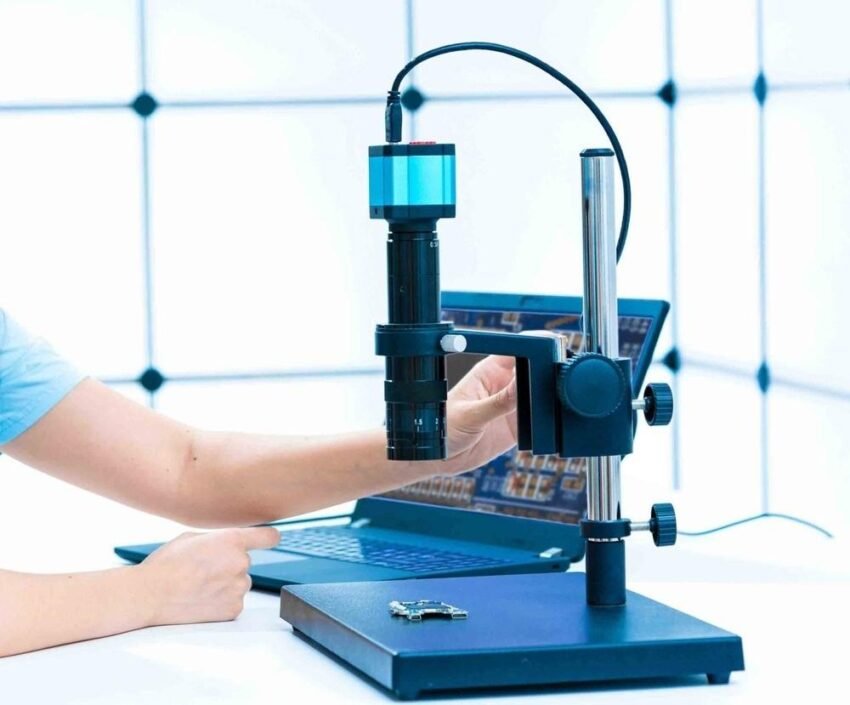
Semiconductor manufacturing relies on unparalleled precision, where even the smallest deviations can lead to defects and yield loss. To maintain accuracy, manufacturers integrate metrology with real-time process control, creating a feedback loop that ensures continuous optimization and minimal waste. Erik Hosler, an expert in semiconductor process control and metrology, recognizes that this integration is essential for improving efficiency, maintaining high yields and reducing variability in chip production.
Why Metrology Alone Is Not Enough
Metrology plays a crucial role in measuring critical dimensions, material properties and defect density throughout semiconductor fabrication. However, when used in isolation, it only provides passive quality assessment, identifying deviations after they have already occurred. Traditional inspection methods, while effective, often result in waste, rework and production inefficiencies because they do not actively correct process errors in real-time.
To overcome these challenges, fabs are embedding metrology directly into their process control systems, enabling real-time monitoring and dynamic adjustments. This closed-loop approach allows for instant corrections in etching, deposition and lithography steps, preventing defects before they impact device performance.
How Real-Time Process Control Enhances Metrology
Real-time process control relies on AI-driven analytics, advanced sensors and automated feedback loops to continuously adjust manufacturing parameters. By integrating metrology data into this system, fabs can:
Optimize material deposition to ensure uniform layer thickness.
Adjust etching processes dynamically to prevent line-edge roughness.
Improve overlay accuracy in lithography, reducing misalignment issues.
This proactive approach helps fabs maintain sub-nanometer precision while improving overall production efficiency.
AI’s Role in Metrology and Process Control
Artificial intelligence is reshaping how fabs utilize metrology data to enhance process control. Machine learning algorithms analyze pattern recognition, defect classification and process variations, allowing fabs to anticipate and correct errors before they occur.
“AI takes the human out of the optimization iteration cycle, allowing the user to specify the performance criterion they are seeking and allowing AI to minimize the design to meet those requirements,” notes Erik Hosler. AI-driven automation ensures that semiconductor fabrication remains highly precise, scalable and efficient, reducing manual intervention while improving quality.
The Future of Integrated Metrology and Process Control
As semiconductor technology advances, the integration of metrology and real-time process control will become even more sophisticated. Future developments will focus on predictive analytics, quantum-based measurement techniques and fully autonomous process control systems that require minimal human oversight.
By leveraging these innovations, semiconductor manufacturers can achieve higher yields, reduced waste and improved production efficiency, ensuring they meet the demands of next-generation semiconductor devices.