
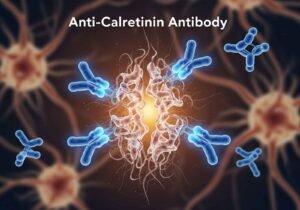
Anti-calretinin antibody reagents serve essential roles in neuroscience research, diagnostic pathology, and developmental biology investigations. Calretinin, a calcium-binding protein encoded by the CALB2 gene, exhibits restricted expression patterns making it valuable for identifying specific neuronal populations, characterizing mesothelioma specimens, and tracking neural development. Understanding optimal applications and technical considerations for anti-calretinin antibodies enables researchers to leverage these tools effectively across diverse experimental contexts.
Calretinin Biology and Expression Patterns
Calretinin belongs to the EF-hand calcium-binding protein superfamily, sharing structural features with calbindin and parvalbumin while maintaining distinct expression patterns and functions. The protein localizes primarily to specific neuronal subpopulations where it modulates calcium signaling, neurotransmitter release, and cellular excitability. Within the central nervous system, calretinin marks GABAergic interneuron subtypes in cortex and hippocampus, Cajal-Retzius cells during development, and specific sensory neurons.
Beyond neural tissue, calretinin expression characterizes mesothelial cells lining body cavities. This restricted distribution proves diagnostically valuable for distinguishing malignant mesothelioma from morphologically similar adenocarcinomas. Pathologists routinely employ anti-calretinin antibodies in immunohistochemical panels when evaluating pleural or peritoneal tumors of uncertain origin. Strong positive staining supports mesothelioma diagnosis while negative staining favors alternative diagnoses.
Neuroscience Research Applications
Immunohistochemical detection of calretinin enables precise neuronal subtype identification in brain tissue sections. Researchers investigating cortical development use anti-calretinin antibodies to track Cajal-Retzius cell migration and eventual disappearance, processes critical for proper laminar organization. Adult brain studies employ calretinin immunostaining to quantify GABAergic interneuron populations, assess their distribution, and evaluate potential alterations in neurological disease models.
Neurodegenerative disease research benefits from calretinin’s selective vulnerability patterns. Certain calretinin-expressing neurons demonstrate resistance to pathological processes affecting neighboring populations, providing insights into protective mechanisms. Comparative studies examining calretinin-positive versus calretinin-negative neuron survival inform understanding of selective vulnerability and may suggest therapeutic strategies for preserving vulnerable neuronal populations.
Diagnostic Pathology Utilization
Mesothelioma diagnosis often requires immunohistochemical characterization to distinguish this malignancy from metastatic adenocarcinoma. Anti-calretinin antibodies form part of standard diagnostic panels alongside other mesothelial markers. Cytoplasmic and nuclear calretinin immunoreactivity in tumor cells strongly suggests mesothelial origin, though interpretation requires consideration of morphological features and additional markers for definitive diagnosis.
Sensitivity and specificity vary depending on mesothelioma subtype, with epithelioid variants demonstrating higher positivity rates than sarcomatoid forms. Pathologists recognize this variability when interpreting staining patterns and integrate calretinin results with other markers including cytokeratin 5/6, WT-1, and D2-40. Comprehensive panel interpretation provides more reliable diagnostic conclusions than relying on single marker results.
Technical Considerations for Optimal Results
Successful calretinin immunodetection requires appropriate antibody selection, tissue preparation, and staining optimization. Monoclonal and polyclonal anti-calretinin antibodies offer distinct advantages: monoclonals provide lot-to-lot consistency and defined epitope specificity, while polyclonals often deliver higher signal amplification through recognition of multiple epitopes. Application-specific validation ensures chosen antibodies perform reliably in intended experimental contexts.
Antigen retrieval methods significantly impact staining quality, particularly in formalin-fixed paraffin-embedded tissues. Heat-induced epitope retrieval using citrate or EDTA buffers typically enhances calretinin antibody binding. Optimal pH and heating duration require empirical determination for specific antibody-tissue combinations. Researchers should validate protocols using positive control tissues exhibiting known calretinin expression before applying methods to experimental specimens.
Multiplexing and Colocalization Studies
Combining calretinin detection with other markers reveals cellular relationships and functional properties. Double immunofluorescence protocols simultaneously visualizing calretinin and other calcium-binding proteins delineate distinct interneuron populations within brain regions. Colocalization with neurotransmitter markers or activity-dependent immediate early genes links calretinin expression to specific functional neuronal subtypes.
Spectral separation requirements govern fluorophore selection for multiplexed experiments. Researchers must choose antibody conjugates or secondary antibodies with minimal emission overlap to prevent signal bleed-through. Controls including single-color staining and samples lacking one primary antibody confirm that observed colocalization represents true dual-positive cells rather than detection artifacts.
Quality Control and Antibody Validation
Thorough antibody validation prevents experimental artifacts and ensures reliable data interpretation. Positive controls using tissues with known calretinin expression confirm antibody functionality, while negative controls including antibody omission and isotype controls assess background staining levels. Western blotting validation verifying band detection at calretinin’s expected molecular weight provides additional specificity confirmation.
Blocking peptide competition experiments offer definitive specificity assessment. Preincubating antibody with calretinin blocking peptide should abolish immunostaining if antibody binding is specific. Persistence of staining despite blocking suggests nonspecific interactions requiring alternative antibody selection. Such rigorous validation, though time-intensive, ensures experimental conclusions rest on solid technical foundations.
Conclusion
Anti-calretinin antibodies represent indispensable tools spanning neuroscience research and diagnostic pathology. Their utility in identifying neuronal subtypes, characterizing mesothelioma, and investigating calcium signaling makes them valuable additions to research antibody panels. Successful application requires understanding calretinin biology, selecting validated antibodies, optimizing detection protocols, and implementing appropriate controls. Researchers investing effort in these technical aspects reap rewards through reliable, reproducible results advancing understanding of nervous system function and disease.