
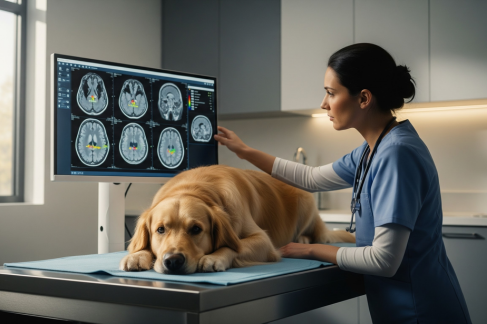
In Chesapeake and the broader Maryland region, veterinary MRI has become one of the most important diagnostic tools for dogs showing unexplained neurological symptoms. Unlike X-rays or basic ultrasound, a veterinary MRI provides detailed imaging of the brain, spinal cord, and nervous system, making it essential when symptoms suggest serious underlying disease.
Most dogs are not immediately referred for MRI. Instead, veterinarians recommend it only when clinical signs strongly indicate neurological dysfunction or when other diagnostic tests fail to explain the condition. Understanding these symptoms can help pet owners in Maryland recognize when advanced imaging may be necessary.
What a Veterinary MRI Evaluates in Dogs
A veterinary MRI uses magnetic fields and radio waves to create highly detailed images of soft tissues, especially the brain and spinal cord. It is considered the gold standard for evaluating neurological conditions because it reveals abnormalities that cannot be seen on X-rays or CT scans in many cases.
In dogs, MRI is most commonly used to assess:
- Brain structures and abnormalities
- Spinal cord compression or injury
- Nerve inflammation or degeneration
- Soft tissue tumors affecting the nervous system
Because neurological conditions often overlap in symptoms, MRI is frequently required to distinguish between inflammation, tumors, vascular events, or structural disease.
When Do Dogs Need a Veterinary MRI?
A dog typically needs a veterinary MRI in Maryland when neurological signs are persistent, progressive, or unexplained after initial examination and basic testing. MRI is usually recommended after a neurological exam identifies abnormalities in brain or spinal function.
The decision is not based on a single symptom but on a combination of clinical signs such as changes in movement, behavior, coordination, or consciousness.
Neurological Symptoms That May Require an MRI
Seizures or Uncontrolled Shaking
One of the most common reasons for a dog MRI is the onset of seizures. If a dog in Chesapeake or surrounding Maryland areas experiences repeated seizures without a known cause, MRI is often recommended to rule out brain tumors, inflammation, or structural abnormalities.
Seizures that increase in frequency, severity, or begin later in life are especially concerning and usually require advanced imaging.
Sudden Loss of Balance or Coordination
Dogs that begin walking unsteadily, falling over, or showing severe imbalance may be experiencing a neurological disorder affecting the brain or spinal cord. These symptoms often indicate vestibular disease, brain inflammation, or spinal cord compression.
If coordination issues persist beyond a short period or worsen, MRI is used to determine the exact cause.
Sudden Paralysis or Weakness in Limbs
A dog that suddenly cannot walk, drags its legs, or shows rapid loss of strength may need urgent MRI evaluation. These symptoms often suggest spinal cord injury or compression.
In many Maryland emergency veterinary cases, MRI is performed to determine whether surgery is required immediately to prevent permanent damage.
Head Tilt or Abnormal Eye Movements
A persistent head tilt combined with abnormal eye movements (nystagmus) can indicate neurological dysfunction affecting the brainstem or inner ear pathways.
If these signs do not resolve quickly, MRI is often needed to differentiate between inner ear disease and central nervous system disorders.
Behavioral Changes and Confusion
Dogs that suddenly become disoriented, aggressive, withdrawn, or unusually unresponsive may be showing signs of brain dysfunction. These changes can be subtle but are clinically significant when persistent.
MRI is used to evaluate possible brain inflammation, tumors, or vascular events causing cognitive or behavioral changes.
Progressive Symptoms That Increase MRI Necessity
Worsening Weakness Over Time
Gradual decline in mobility, such as increasing difficulty standing, climbing stairs, or maintaining posture, may suggest degenerative neurological disease. MRI helps identify whether the issue is located in the brain, spinal cord, or peripheral nerves.
Pain Along the Spine or Neck
Dogs showing signs of spinal pain—such as reluctance to move, yelping when lifted, or stiff posture—may require MRI if symptoms persist. This is especially important in suspected intervertebral disc disease or spinal cord compression cases.
MRI provides detailed imaging of discs, spinal cord tissue, and surrounding structures, which is essential for treatment planning.
Loss of Bladder or Bowel Control
Neurological diseases affecting the spinal cord can also impact bladder and bowel function. If a dog develops incontinence along with mobility issues, MRI is often required to assess nerve damage or spinal compression.
When Basic Tests Are Not Enough
Veterinarians in Maryland typically begin with physical and neurological examinations, blood tests, and sometimes X-rays. However, these tests cannot visualize soft tissue structures of the brain or spinal cord in detail.
MRI becomes necessary when:
- Symptoms persist without diagnosis
- Neurological signs point to brain or spinal involvement
- X-rays or CT scans do not explain the condition
- Surgical planning is required for spinal or brain disease
MRI is often chosen because it provides high-resolution images that allow veterinarians to identify even small structural changes affecting neurological function.
Why Timing Matters in Neurological Cases
Neurological conditions in dogs can progress rapidly. In many Maryland veterinary neurology cases, early MRI can significantly improve treatment outcomes, especially for conditions like spinal compression, brain inflammation, or tumors.
Delaying MRI when symptoms are severe may result in worsening nerve damage, reduced treatment options, or longer recovery times.
Conclusion
A veterinary imaging in Maryland is recommended for dogs when neurological symptoms suggest serious underlying disease that cannot be diagnosed through basic tests. The most important warning signs include seizures, sudden paralysis, loss of coordination, head tilt, behavioral changes, and progressive weakness.
When these symptoms appear—especially if they worsen over time—MRI becomes a critical step in identifying the exact cause and guiding appropriate treatment.
If you are seeking a veterinary MRI center in Maryland, you can rely on VNIoC. For more information, visit the site.