
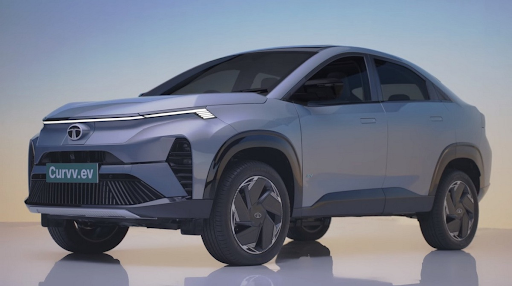
The Tata Curvv offers about 208 mm of ground clearance in its combustion-engine form, giving it a useful margin for speed breakers, broken roads and uneven approaches. The figure supports its SUV-coupe positioning, although wheelbase, load and driving technique still influence scraping risk.
Why 208 mm is useful on Indian roads
A clearance above 200 mm gives the Curvv more underbody margin than many sedans and hatchbacks. It is helpful on deep road joins, steep parking ramps and poorly shaped speed breakers. It does not make the vehicle suitable for unrestricted off-roading.
Static clearance is only part of the picture
Published tata curvv ground clearance is measured under defined conditions. A full passenger load, luggage and suspension compression reduce the effective space. The Curvv’s wheelbase also affects breakover angle, so a sharp crest may still contact the centre underside.
How it compares with compact and midsize SUVs
Many compact SUVs sit around 190-210 mm. The Curvv is therefore competitive on paper. Vehicles with similar clearance can behave differently because of bumper overhangs, wheel size, suspension tuning and underbody protection.
| Category | Typical ground clearance |
| Sedan or hatchback | Often 160-180 mm |
| Compact or midsize SUV | Often 190-210 mm |
| Tata Curvv ICE | About 208 mm |
City and highway benefits
The higher clearance reduces anxiety on damaged urban stretches and monsoon potholes. On highways, it helps when entering fuel stations or roadside properties with abrupt ramps. The driver should still slow before an obstacle because high-speed impacts can damage tyres, wheels or suspension even when the body clears.
Maintain the clearance advantage
Correct tyre pressure and suspension health are essential. Oversized aftermarket wheels can reduce ride comfort or alter rolling diameter. Heavy accessories and overloading also change the way the car settles. Keeping the vehicle close to factory specification preserves predictable behaviour.
- Retain the recommended tyre size and load rating.
- Slow down before potholes rather than swerving suddenly.
- Avoid exceeding the permitted payload.
- Inspect alignment after a severe road impact.
Verdict for typical buyers
Around 208 mm is generous for normal Indian road use and supports the Curvv’s crossover role. Buyers who regularly travel on deeply rutted tracks should assess approach angles and tyre sidewalls during a route-specific test drive instead of relying on one number.
Road-use checks for Tata Curvv buyers
Before finalising this topic, verify the latest manufacturer brochure, the exact variant specification and the local dealer quotation. A short test drive should reproduce the buyer’s normal roads rather than a smooth demonstration loop. This helps reveal visibility, ride quality, control effort and cabin comfort that cannot be understood from a specification sheet alone.
Ownership quality also depends on factors outside the headline figure. Insurance coverage, tyre replacement, scheduled service, warranty exclusions and resale expectations can change the overall value. Recording these items beside the purchase price creates a more complete comparison and reduces the chance of choosing how much ground clearance does the tata curvv offer? on one attractive number alone.
Ground clearance and coupe-SUV design
The sloping roof does not directly determine underbody clearance, but it can affect rear headroom and luggage shape. Buyers attracted by the coupe silhouette should check whether tall rear passengers sit comfortably and whether bulky suitcases fit below the parcel shelf.
Large wheels can make the Curvv look proportionate, yet tyre sidewall height affects impact absorption. Lower-profile tyres may be more vulnerable on sharp potholes. Replacement cost and availability should be considered before selecting a wheel-focused top variant.
On loose or rocky tracks, clearance alone is insufficient. Traction, tyre construction and underbody protection determine whether the car can proceed safely. The Curvv is best treated as a road-focused crossover with useful rough-road margin, not a substitute for a purpose-built off-roader.
Use the clearance without abusing it
The final decision should be documented in one page: the chosen configuration, the strongest reason for buying it, the main compromise and the expected annual cost. Writing these points down helps separate a durable need from showroom excitement. It also makes later comparisons more consistent because every alternative is judged against the same household priorities rather than a changing list of impressions.
The Curvv’s generous clearance should be used as a margin for imperfect roads, not permission to tackle obstacles at speed. Suspension and tyres still absorb the impact, and repeated abuse can cause alignment or component wear.
Owners who frequently load the car should check rear ride height and tyre pressure before travel. Correct loading keeps steering and braking predictable while preserving as much effective clearance as possible.
Curvv clearance in everyday ownership
A pre-delivery inspection should include the lower bumper, wheel arches and underbody guards. Existing transport damage or loose panels should be corrected before registration and final acceptance.
Before paying the balance, buyers should record the selected variant, key inclusions, expected annual running and the main compromise they have accepted. A written decision is easier to review and less likely to be changed by last-minute pressure at the dealership.
The final comparison should be made against the exact model year and variant available at the dealership. Equipment, pricing and warranty terms can change, so the current official brochure and a written quotation should take priority over older listings or assumptions.