
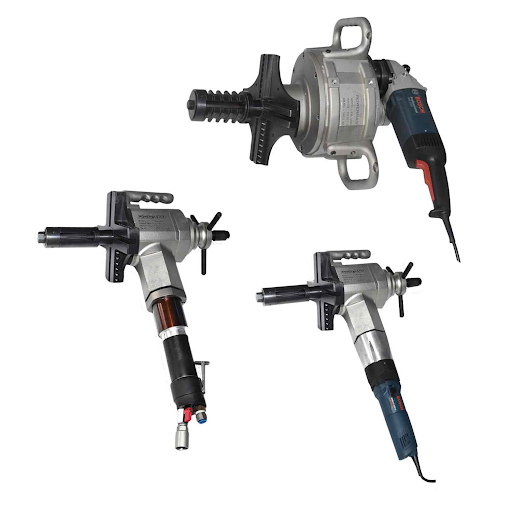
Pipe beveling is an important step in preparing for welding operations since it influences the strength of the joint and the depth of the welds, as well as the long-term reliability of the system as a whole. In industrial welding, the most common method to prepare the edges before welding is with the help of a tube beveller. Typically, all welding specifications require bevel angles between 30° and 37.5°.
Even a minor mistake in beveling will cause welding problems and increase the number of rejects, which is why the proper usage of a pipe beveler is extremely important in such industries as oil & gas, boilers, and heat exchangers.
1. Poor Pipe Alignment and Clamping
Poor alignment is one of the quickest ways of ruining the quality of bevels. When the pipe is poorly aligned in relation to the pipe beveling machine, there is an unequal removal of the material by the cutting tool.
Results:
- Misaligned bevel shape
- Increased vibration during the cut
- Shortened tool life and poor fit-up for welding
Calibration of the system ensures that the tube bevelling machine cuts concentrically and consistently.
2. Wrong Tooling Selection for Material
The use of wrong insert grades or tooling is the biggest problem in pipe beveling operations. Various material types will require special tooling; for instance, carbide inserts are used for stainless steel, while coated inserts are for alloy steels. Using the wrong tooling in pipe beveling leads to chatter marks, poor edge quality, and quicker wear
3. Ignoring WPS and Engineering Specifications
Every professional pipe fitting job abides by specific welding specifications such as ASME Section IX and WPS specifications for individual projects.
Such specifications include:
- Bevel angle (typically 30°, 37.5°, or double-V shape for thick pipes)
- Root face (or land) measurements for penetration control
- Root gap specifications for strength
Non-conformance with these settings with a tube bevelling machine results in poor welds such as no fusion or incorrect penetration.
4. Incorrect Speed and Feed Parameters
Running pipe beveling machine beyond optimal cutting parameters has a direct impact on quality and efficiency.
- RPM too high: vibrations, overheating, poor surface
- RPM too low: inefficient cutting, poor material removal
- Feed rate incorrect: waviness, stresses in tool
Using manufacturer-suggested machining charts is key to achieving consistent bevel quality.
5. Inadequate Surface Preparation
Surfaces that are not cleaned usually get ignored, yet they have a direct effect on the machining process.
Pre-bevelling activities:
- Cleaning of rust, paint, and oxides
- Cleaning of oil and grease stains
- Checking for dryness and stability of pipes
This ensures that the tube beveller cuts smoothly and increases the life of inserts.
6. Lack of Preventive Maintenance and Calibration
The inefficiency in maintaining the pipe beveling machine will lead to an inconsistency in the beveled angles formed. This is because, without proper lubrication, faulty bearings, and blunted blades will result in inconsistencies in the accuracy achieved. Calibration ensures that the correct bevel angles are produced.
7. Skipping Final Inspection and Quality Checks
The slightest discrepancy could lead to faulty welds if undetected on time.
The inspection process must always include:
- Checking for bevel angle accuracy
- Uniform root face
- Good surface finish without any burrs
In high-quality construction, even 1° makes a huge difference.
Conclusion
As you avoid these seven errors, you are assured of producing high-quality welds, minimizing rework, and improving the efficiency of operation. A well-maintained pipe beveling machine will help you to maintain uniform bevel geometry, meet the requirements of WPS standards and increase the efficiency of operation.
For those who require highly accurate solutions when it comes to preparing pipes for their application, you should try tube expanders whose equipment has been designed to meet the needs of challenging fabrication environments, including boilers, heat exchangers, and heavy fabrications.
In case your company intends to achieve accuracy and minimize errors in beveling and welding, then it is advisable that you upgrade to professional tools such as those offered by Powermaster Engineering experts.
For More Info Visit:- teachdiary.com