
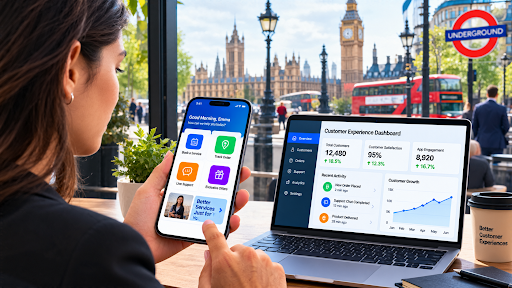
Femi Adeyemi runs a small independent cinema in Peckham, the kind with mismatched velvet seats, a bar that sells proper ginger beer, and a loyal crowd who talk through the credits. For years, bookings came by phone or a clunky third-party site, and half of Saturday night’s chaos involved people queuing to ask whether the late screening still had seats. Last spring, Femi launched a simple app with live availability, member discounts, pre-ordered drinks, and clear information on step-free access and subtitled screenings. The queue at the box office shrank, the bar got busier before the trailers began, and regulars started saying the cinema “just felt easier.”
Stories like this are why more owners across the capital are exploring a Mobile app Development service in London to turn good hospitality into good digital hospitality. London customers are demanding. They commute, multitask, compare, and expect brands to keep up. This guide looks at how businesses across the city use mobile apps to improve customer experiences, what works, what goes wrong, and how to plan an app that people genuinely enjoy using.
What London Customers Expect
London is a city of people in motion. Commuters hop between the Tube, buses, and bikes. Tourists arrive with phones full of maps and translation tools. Residents juggle long days, high prices, and a thousand options for dinner. Time and attention are the scarcest resources.
That shapes behaviour. Customers expect to book without calling, pay without queuing, and find information without hunting. Transport for London made contactless payment normal across the network, and apps like Citymapper and TfL Go proved that real-time information can feel effortless. Banking apps from Monzo and Starling trained people to expect instant notifications and clear controls. Delivery platforms such as Deliveroo and Just Eat made tracking an order feel routine.
Once people experience that standard, they carry it everywhere. A shop with a slow checkout or a restaurant with a confusing booking process feels outdated, however good the product is. Apps are one of the clearest ways to meet the standard.
Booking, Ordering, and Skipping the Queue
The most visible improvement is speed. Apps let customers reserve a table, book a haircut, order a coffee, or buy theatre tickets in a few taps.
Restaurants and cafes use order-ahead to reduce lines at busy hours. Pret A Manger’s app and subscription model, Nando’s ordering tools, and Dishoom’s booking system show how restaurant groups blend convenience with brand personality. Smaller operators follow with simpler versions: scan a QR code, order from the table, pay on the phone.
Cultural venues benefit as well. Theatres in the West End, galleries like the Tate and the V&A, and venues such as the Southbank Centre use apps and digital wallets for tickets, timed entry, and event updates. Visitors avoid paper confirmations and last-minute scrambles.
For Femi, the live seating view mattered most. Customers could choose their seats, see how full a screening was, and receive a reminder an hour before the film started. No-shows fell, and so did the number of “is it sold out?” phone calls.
Payments That Disappear Into the Background
The best payment experience is one people barely notice. London’s customers are comfortable with contactless cards, Apple Pay, and Google Pay, and apps that support them reduce friction at checkout.
Saved details make repeat purchases easy. Open Banking has added pay-by-bank options that bypass card fees and settle quickly, which small businesses appreciate. Strong Customer Authentication rules, introduced under UK and European payment regulations, require extra verification for many online payments, so good apps handle it smoothly through biometric prompts rather than clumsy pop-ups.
Splitting bills, tipping, and gift cards fit naturally into apps. A group dinner in Soho can end without anyone doing sums on a napkin. For retailers, digital receipts and simple returns improve trust and reduce paper.
Loyalty and Personalisation That Feel Thoughtful
Loyalty schemes have been part of British retail for decades, from Tesco Clubcard to Sainsbury’s Nectar to Boots Advantage Card. Apps have moved them from the bottom of a handbag to the home screen.
A well-designed loyalty app does more than collect points. It remembers favourite orders, suggests relevant offers, and rewards behaviour that matters, such as visiting on quiet weekdays. A coffee shop in Clapham might send a free pastry offer on a rainy Tuesday. A bookshop in Hampstead could notify a customer when a signed edition arrives from a favourite author.
The line between helpful and creepy is thin. Customers appreciate offers that reflect their interests, but they quickly mute messages that feel generic or constant. A useful test is whether a friendly shopkeeper would say the same thing in person. Under UK data protection and marketing rules, businesses need clear consent and easy opt-outs, so thoughtful personalisation is also good compliance.
Real-Time Information in a Busy City
London is complicated, and customers value clarity. Apps help by showing live information at the moment it matters.
A restaurant can display current waiting times. A gym can show how busy it is right now. A department store like Selfridges or John Lewis can show whether an item is in stock at a nearby branch and offer click-and-collect. A museum can indicate which galleries are quiet. A venue can send updates about delays, gate changes, or weather.
Transport links are especially important. Apps that integrate with TfL data can suggest the best route to a shop or venue, warn about line closures, and remind visitors about Ultra Low Emission Zone charges if they’re driving. Santander Cycles and e-bike services add flexible options. Airports such as Heathrow and Gatwick use apps for flight updates, parking, and wayfinding.
Small touches reduce stress. Telling a customer their table is ready, their parcel is five minutes away, or their appointment has moved earlier shows respect for their time.
Accessibility and Inclusion
London is one of the most diverse cities in the world, with more than three hundred languages spoken. Inclusive design isn’t a nice extra. It’s central to good service.
Accessibility starts with the basics: screen reader support through VoiceOver and TalkBack, adjustable text sizes, strong colour contrast, clear labels, and touch targets large enough for easy tapping. Following the Web Content Accessibility Guidelines helps teams meet widely recognised standards, and the Equality Act 2010 requires service providers to make reasonable adjustments.
Information matters as much as design. Femi’s cinema app lists step-free routes, relaxed screenings for neurodivergent audiences, subtitled showings, and quiet seating areas. Those details transform the app from a booking tool into a signal that everyone is welcome.
Language support also widens reach. Offering key content in languages such as Spanish, Polish, Bengali, Urdu, Turkish, and Arabic can open a business to communities that larger brands overlook.
Customer Support Without the Phone Queue
Few things frustrate customers more than waiting on hold. In-app messaging offers a better path. Customers can ask a question, attach a photo, and get an answer without staying on the line.
Many businesses combine human support with automated assistants. A chatbot handles opening hours, order status, and return policies, then passes complicated problems to a person with the conversation history intact. The handover is the crucial part, because repeating yourself is annoying.
WhatsApp Business is popular in London, too, so some companies connect it to their apps for quick updates. Clear response times, polite tone, and visible follow-up build trust. Customers will forgive a mistake if it’s fixed quickly and honestly.
Retail and Omnichannel Shopping
London’s retail scene, from Oxford Street and Westfield to independent markets in Brixton and Broadway Market, thrives when physical and digital experiences blend.
Shoppers browse on their phones, reserve items for collection, and check stock before leaving home. Some stores let customers scan barcodes in-store to read reviews, find other sizes, or pay without queuing. Grocery services like Ocado and supermarket apps manage repeat orders with saved baskets and delivery slots.
Independent shops compete by adding personality. A vintage clothes seller might offer live video showings for customers who can’t visit. A plant shop might send care reminders. A record store in Soho could alert collectors when rare vinyl arrives.
Culture, Sport, and Leisure
Football clubs such as Arsenal, Chelsea, and Tottenham Hotspur use apps for tickets, matchday information, merchandise, and fan content. Wimbledon’s app brings live scores and order-of-play updates to fans around the world. Theatres, concert venues like the O2, and festivals use apps to keep audiences informed and engaged.
Museums and galleries offer audio guides, interactive maps, and bite-sized stories that enrich visits. A family at the Science Museum can follow a trail that keeps children curious, and visitors at the British Museum can explore collections in multiple languages.
These experiences show a larger lesson: apps work best when they add something that wouldn’t otherwise exist, not when they merely duplicate a website.
Healthcare and Everyday Services
The NHS App lets people book appointments, order repeat prescriptions, and view their records. Private clinics and wellbeing providers offer online booking, reminders, and secure messaging. Dentists, physiotherapists, and opticians reduce missed appointments by confirming times and making rescheduling simple.
Health information is highly sensitive, so these apps need strong security and careful handling under UK GDPR. Customers should always understand who can see their data and why.
Home services, from cleaners to tradespeople, also use apps for booking, photos of jobs, invoices, and reviews. Transparent pricing and tracked arrival times remove a lot of uncertainty.
Privacy, Consent, and Trust
Customers in London are increasingly aware of how companies use their data. UK GDPR and the Data Protection Act 2018 set rules for collecting and processing personal information, overseen by the Information Commissioner’s Office. The Privacy and Electronic Communications Regulations govern marketing messages and cookies, and new rules on subscriptions and consumer protection are tightening expectations around clear terms and easy cancellation.
Good practice is straightforward: collect only what you need, explain it in plain English, secure it properly, and let people change their minds. Trust isn’t a legal box to tick. It’s the foundation of loyalty.
Starting Small and Learning Fast
Many London owners worry about cost and complexity, and the answer is often to begin with something modest. MVP Mobile app Development, a lean first version built around the single most valuable feature, lets a business test demand before committing a larger budget. Femi chose booking and membership as his starting point and launched in about ten weeks. Features such as pre-ordered drinks and gift vouchers followed once customers showed they wanted them.
A few practical lessons help any early project:
- Solve one problem first. A queue, a missed booking, or a slow checkout is a strong starting point.
- Talk to customers. Ask regulars what annoys them and listen carefully.
- Involve staff. Frontline teams spot practical issues that managers miss.
- Plan for iPhone and Android. London leans iPhone in many segments, but ignoring Android shuts out a large audience. Cross-platform tools can cover both.
- Think about integrations. Link to payment providers, booking systems, and stock tools so data flows smoothly.
- Promote it in person. QR codes at the till, on menus, and on receipts drive more downloads than adverts.
- Budget for upkeep. Updates, security patches, and small improvements continue long after launch.
Measuring Whether Customers Are Happier
Good intentions need evidence. Track measures that connect to experience:
- Adoption and repeat use: downloads, active users, and return visits
- Task completion: how many people finish bookings or checkouts
- Satisfaction: Net Promoter Score, short in-app ratings, and reviews on Google and Trustpilot
- Operational impact: queue length, no-show rate, and support calls avoided
- Revenue signals: average order value and frequency of purchase
Pair numbers with conversation. Femi learned more from a chat with an elderly member, who asked for larger buttons, than from a month of analytics.
Common Pitfalls
App fatigue. Customers don’t want a separate app for every shop. Some businesses start with mobile web or wallet passes and add an app later.
Overcomplication. Too many features overwhelm people.
Neglecting accessibility. It excludes customers and creates legal risk.
Poor performance. Slow loading and crashes quickly erode goodwill.
Aggressive notifications. Too many alerts lead to deletions.
Ignoring offline moments. Basements, tunnels, and crowded venues have weak signals, so key information should be available without a connection.
Frequently Asked Questions
How are mobile apps improving customer experiences in London?
They speed up booking, ordering, and payments, personalise offers, provide real-time information, simplify support, and make services more accessible.
Do small London businesses really need an app?
Not always. A good mobile website can be enough at first. An app makes sense when you have repeat customers, bookings, loyalty goals, or a need for push notifications and smoother experiences.
What features matter most in a customer-facing app?
Fast onboarding, easy booking or checkout, saved preferences, live updates, accessible design, and simple ways to contact support.
How long does it take to build a business app?
A focused first version typically takes two to four months. More complex products can take six months to a year, including testing and app store review.
What data protection rules apply to London businesses?
UK GDPR, the Data Protection Act 2018, and the Privacy and Electronic Communications Regulations, along with sector-specific rules where relevant.
How can businesses encourage customers to download their app?
Offer a clear benefit, such as a first-order discount or early access, promote it in-store with QR codes, and train staff to mention it.
Final Thoughts
A good customer experience in London comes down to respect for people’s time, intelligence, and individuality. Apps don’t replace human warmth, but they can remove the small frustrations that get in its way: the queue, the confusion, the missed message, the form nobody wants to fill in.
On a rainy Friday night in Peckham, Femi stands by the bar watching people drift in with their phones already open, tickets ready, drinks pre-ordered. Someone laughs about the weather, someone else asks for a recommendation, and the first trailer begins. The app is nowhere in sight, which is how he likes it. It does its work quietly, so the evening can feel like an evening.